About the Equidistant Clef
Background and Design Process
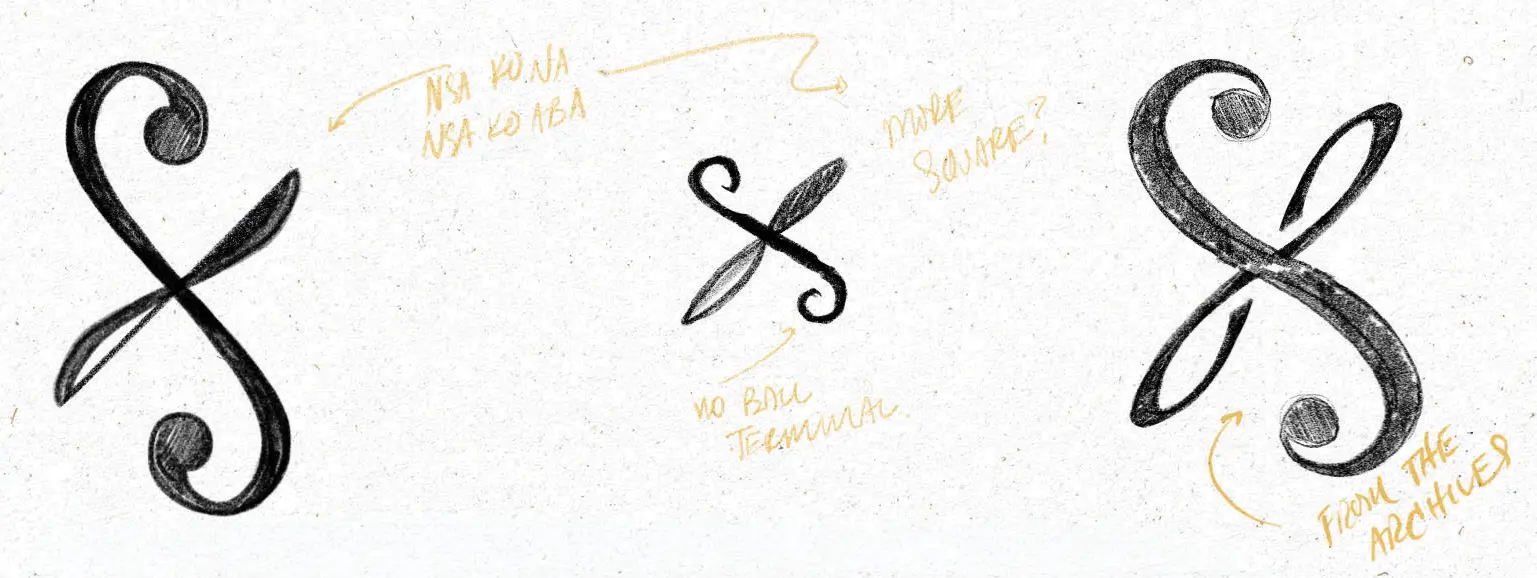
Early sketches of the Equidistant Clef, designed by Mike Macfarlane in collaboration with Dave Kobrenski.
The Problem
The Equidistant Clef grew out of a practical problem I encountered while preparing the musical transcriptions for my upcoming book, The Mande Flute, which explores the ancient musical traditions of the Maninka people of West Africa.
This music does not traditionally use the fixed interval relationships assumed by modern Western diatonic notation. Instead, the traditional tambin and many balafons use seven-note tunings in which the intervals are approximately equal. Such a scale can be described as equidistant heptatonic. In practice, however, the exact intervals may vary from region to region, from instrument to instrument, and according to the ear of the individual instrument maker. For this reason, I prefer the term pen-equidistant—“almost equidistant”—to describe this practical, ear-based tuning.
This difference becomes immediately apparent to Western-trained musicians upon picking up a traditionally tuned balafon, or the three-holed flute that is the subject of The Mande Flute. Known locally as tambinfulé, or more commonly in the West as the “Fula flute,” the instrument was my focus during nearly two decades of research and training in West Africa with master musician and flute maker Lanciné Condé.
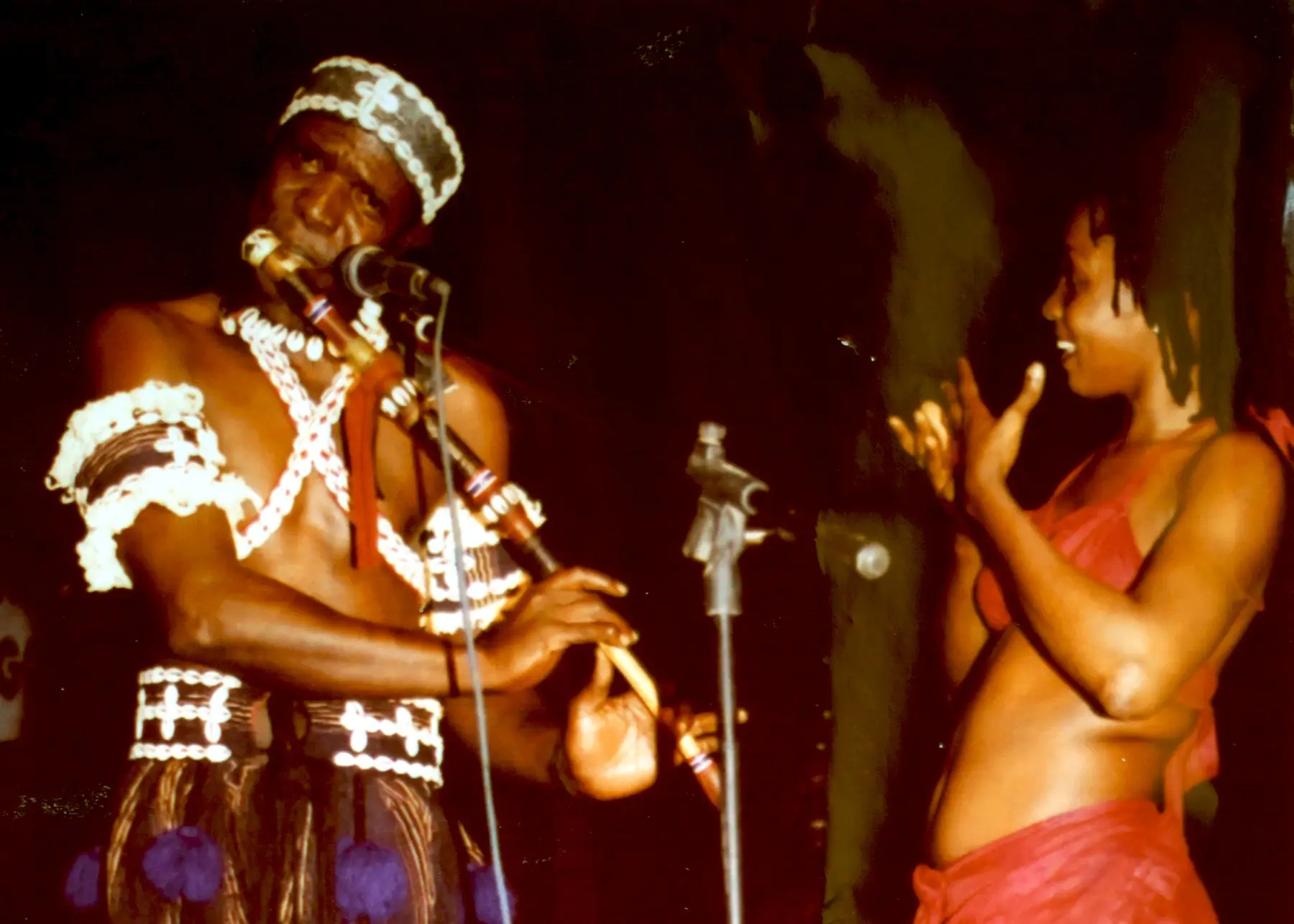
Early photo of Lanciné Condé, master musician and flute maker.
Lanciné’s musical ear was impeccable. He insisted upon the traditional tuning for his flutes and held a certain disdain for the Western scale, which, to his ear, could not produce the same tonal colors or melodies as the scale he had inherited.
Too often, unfamiliar tunings are dismissed by Western musicians as simply being “out of tune.” Some even attempt to “educate” traditional instrument makers in how to tune their instruments properly. In my experience, this attitude has only helped create a market for balafons retuned to the Western scale, while traditionally-tuned instruments have become increasingly difficult to find. In the process, the original musical tradition is at risk of being eroded and lost.
For musicians like Lanciné, however, pen-equidistant tuning is intentional. It is essential to producing the songs played on these instruments with their full melodic character and tonal color. To approach this music seriously, we must resist the impulse to correct it into conformity, and instead learn to hear it on its own terms.
For the musicologist seeking to document this music, that immediately presents a problem of notation. On the one hand, forcing traditional music into conventional Western notation can obscure some of its essential character. On the other, creating an entirely new notation system would make the music far less accessible to most readers, defeating the purpose.
Existing Solutions
This challenge is certainly not new. Musicians and musicologists have long adapted Western staff notation through new clefs, accidentals, tablatures, and other symbols developed for particular musical needs.
Lynne Jessup, for example, confronted essentially the same problem while documenting closely related repertoire in The Mandinka Balafon, calling attention to the need for a notation that did not misrepresent the balafon’s interval system. More recently, Kuljit Bhamra and Keda Music developed the Indian Drum Clef, giving the two-headed drums of the Indian subcontinent a recognizable notational identity.
To my knowledge, however, no widely adopted clef exists specifically to signal an equidistant or nearly equidistant pitch system.
The Idea
My solution in The Mande Flute is a practical compromise, taking its cue from musicologists such as Lynne Jessup, who worked with essentially the same musical repertoire in a closely related region.
Because the traditional tambin and balafon scales contain seven tones, their melodies can be mapped onto familiar positions on a standard five-line staff. The notes of a “G” pen-equidistant scale, for example, can be written using the same note names and general contour as a Western G scale, even though the intervals between those notes are not quite the same.
This makes the music readable, but it also creates the risk that readers will interpret the written notes according to the Western interval system they already know. A symbol is therefore needed to indicate that a different musical system is at play.
The Equidistant Clef serves as that signal. Consider, for example, the opening line from the traditional Maninka melody Fakoli:

Here, the presence of the equidistant clef does not prescribe the exact tuning of each note; those intervals remain tied to the instrument, its maker, and the musical tradition. Instead, the clef tells the reader that the staff belongs to an equidistant or nearly equidistant interval system and should not be interpreted according to the assumptions of the Western major scale.
The overarching idea was never to replace Western notation or invent a completely new system. Instead, I wanted to preserve everything musicians already know about reading rhythm, contour, and relative pitch, while gently reminding them that the intervals belong to a different musical tradition.
The Equidistant Clef is my attempt to create a shared and reusable convention for doing this—one that other musicians may also use when notating music based on equidistant or nearly equidistant scales.
Finding the Symbol
Once I knew what the clef needed to communicate, the next challenge was visual.
I needed a symbol that would work elegantly with the existing five-line staff. Like the standard G clef, it should be relatively easy to draw freehand. Its form should also evoke ideas of balance, equality, reciprocity, and universality.
I found inspiration in Adinkra, an Akan visual tradition associated particularly with Ghana and Côte d’Ivoire. Adinkra symbols embody proverbs, philosophical ideas, historical references, and human values.
Adinkra belongs to a cultural tradition distinct from that of the Maninka, and I was not looking for a generic symbol of “Africa.” Rather, I wanted a symbol whose meaning reflected the relationships and values through which this project had come into being.
After considerable research, sketching, and brainstorming, one symbol stood out: Nsa Ko, Na Nsa Aba, meaning “Hand go, hand come.” It represents reciprocity, mutual aid, and community cooperation—the idea that generosity and support move in both directions, allowing a community to flourish.

The “Nsa Ko, Na Nsa Aba” Adinkra symbol.
Collaboration and Process
At this point, I had an idea that felt compelling. It offered a practical solution to the notation problem in The Mande Flute, but it also reflected the mutual respect, cooperation, and reciprocity that have always been at the heart of my work in West Africa.
It was clear, however, that creating a clef capable of functioning clearly and consistently in published music would require a professional designer.
I contacted my friend Mike Macfarlane, a talented logo designer with Three Squirrels Collective. Over the course of several months, we exchanged ideas, refined initial sketches, and gradually transformed the Adinkra-inspired concept into a new musical clef.
Mike succeeded in producing a professional design that works elegantly where a conventional treble clef would ordinarily appear, and which I am proud to see gracing the sheet music in The Mande Flute.
The inspiration drawn from Nsa Ko, Na Nsa Aba ultimately reflected the spirit of the project itself. The Equidistant Clef emerged through exchange across musical traditions, through the long relationship between teacher and student, and finally through the collaboration between Mike and me.
The result is not a replacement for standard notation. It is simply another tool—one that allows music built on equidistant scales to be represented a little more faithfully while remaining immediately familiar to musicians who already read the staff.
The sketches below, all from Mike Macfarlane’s design book, show how the idea evolved from its earliest explorations into the finished Equidistant Clef.
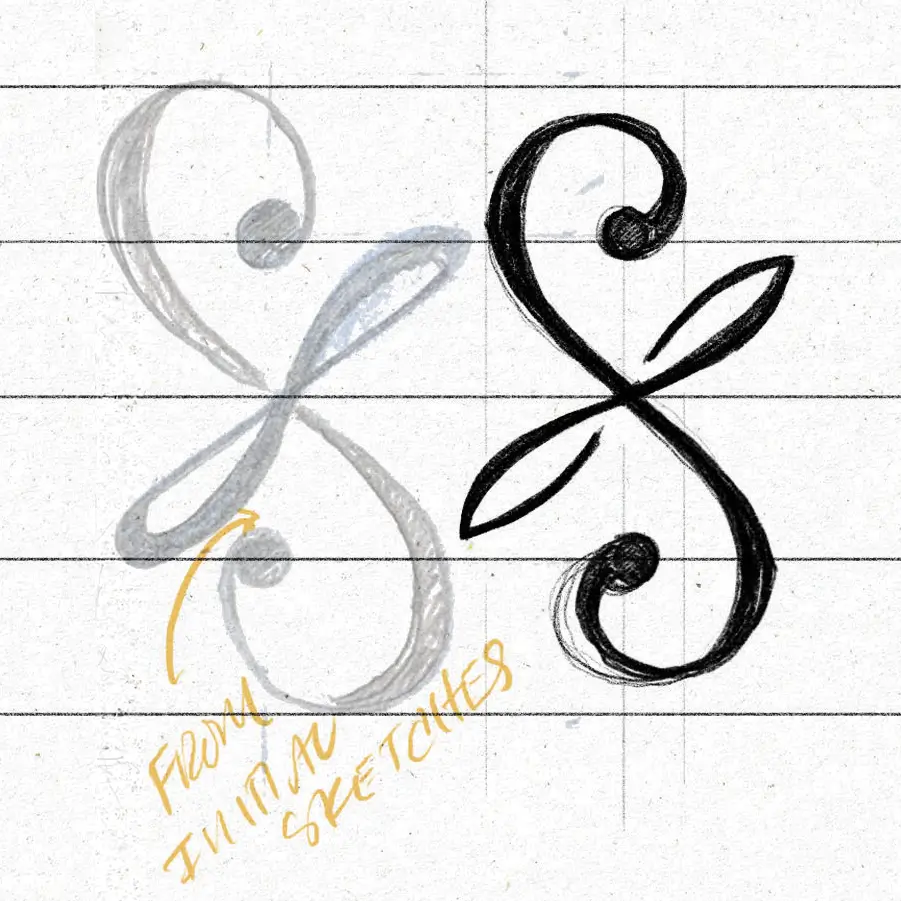
Initial idea sketches.
Refining the idea.
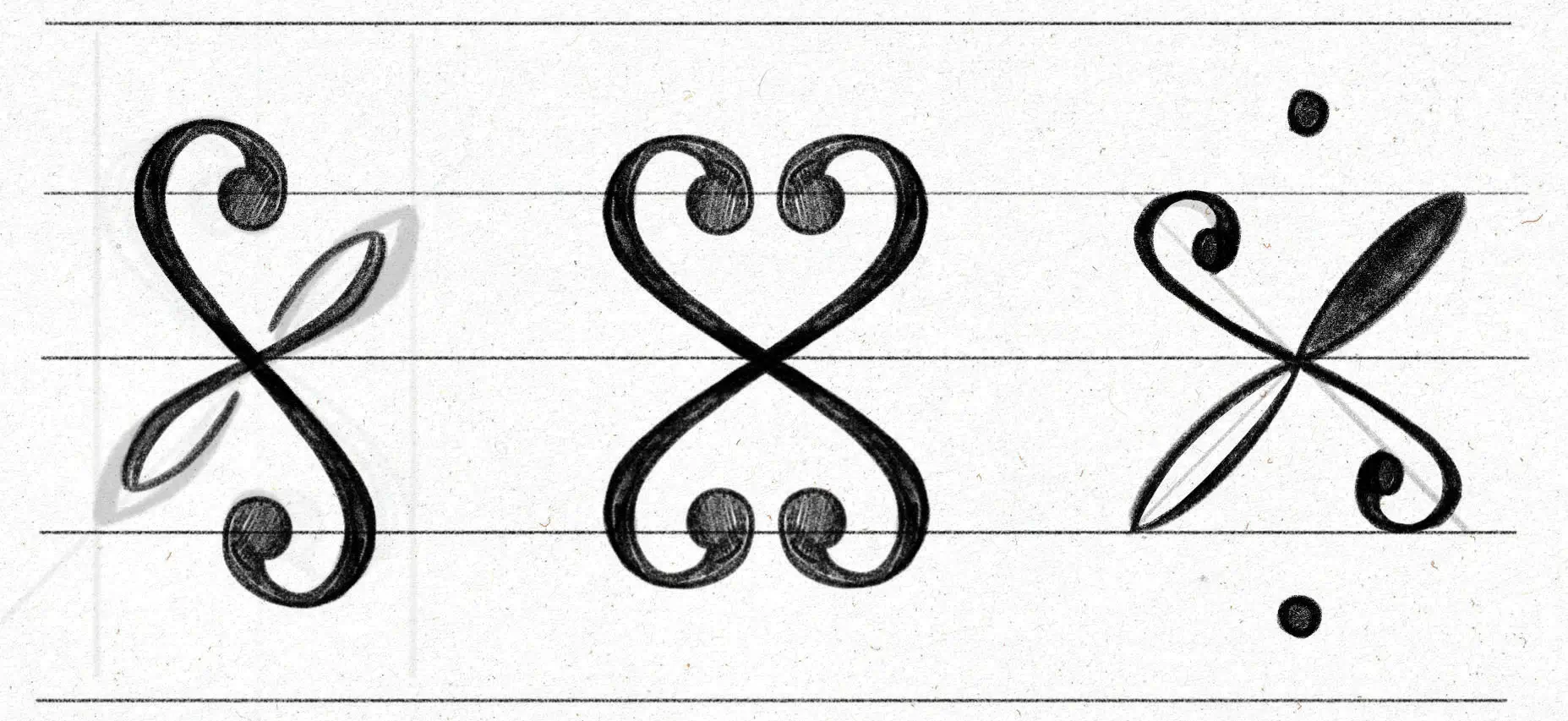
Further refinements and explorations.
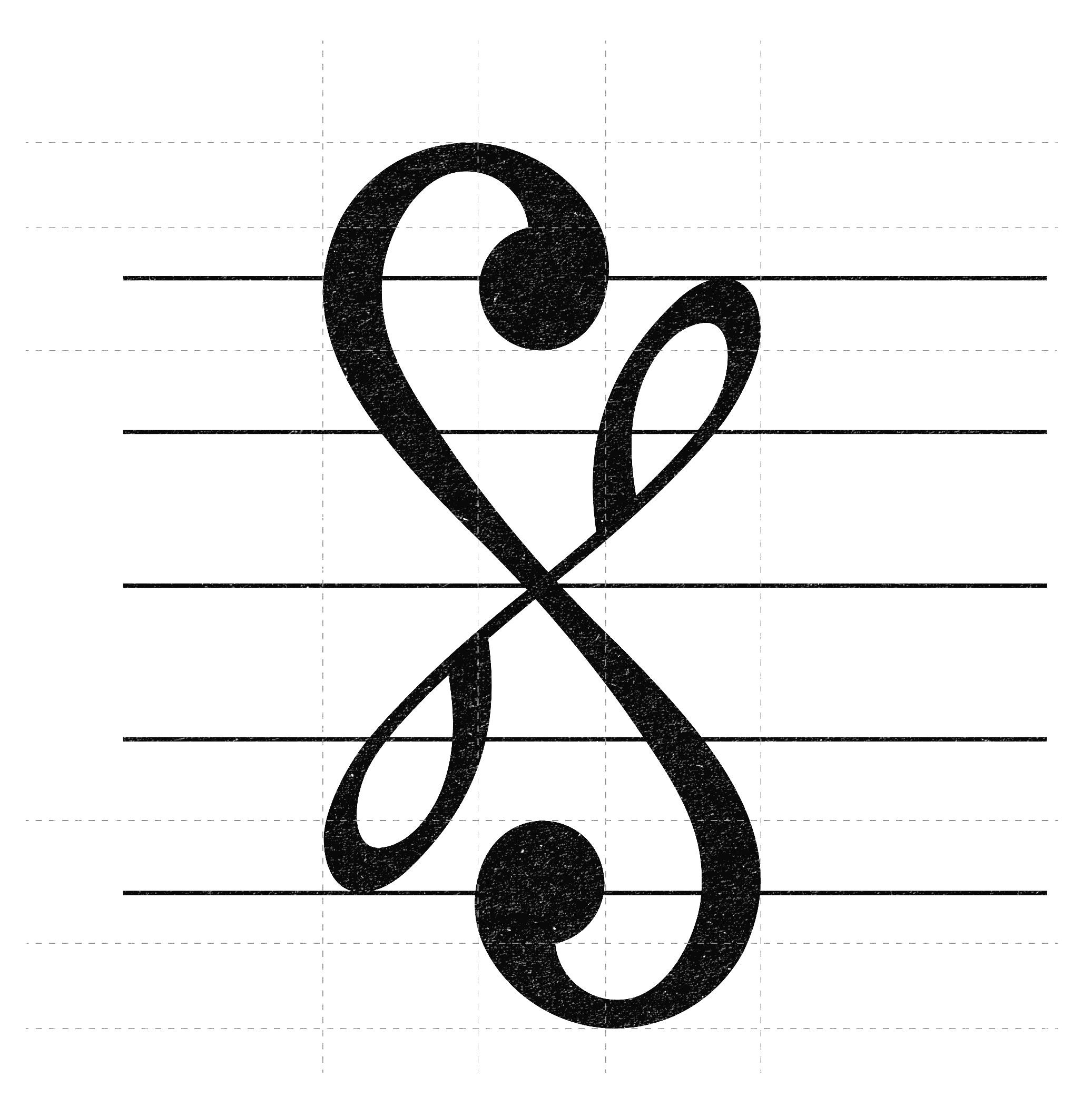
The near-finished clef, aligned to the staff and showing its proportions.
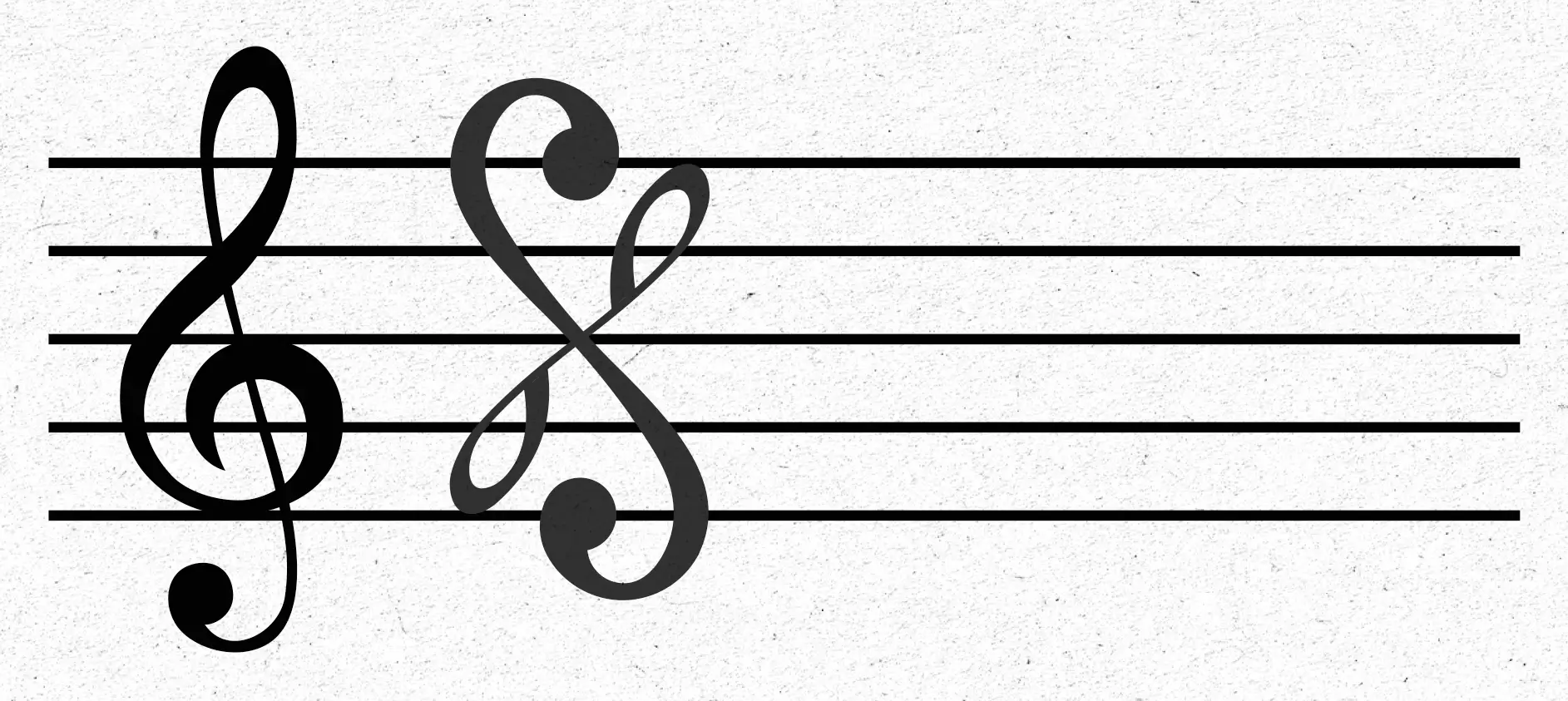
Comparing the treble and equidistant clefs on the same staff.
The completed Equidistant Clef can be downloaded here, and is offered under a Creative Commons Attribution 4.0 International license.
Dave Kobrenski
July 2026
davekobrenski.com

About the Author
Dave is an artist, musician, and author of the books Finding the Source, Djoliba Crossing, and Drawing on Culture. You can learn more about his latest projects here, or contact him here.